
I am a 14-year-old student from Karachi, Pakistan, with a deep passion for artificial intelligence and machine learning. My programming journey began approximately five years ago, starting with basic concepts and evolving into a focus on building interpretable and impactful AI systems.
My primary interests lie in Theoretical Artificial Intelligence (AI), autonomous systems, and open-source software development. I am motivated by the challenge of making complex AI models transparent and trustworthy for real-world applications. Outside of technology, I enjoy problem-solving, continuous learning, and exploring the intersection of theory and practice.
I am currently a student at Beaconhouse School System, Karachi, balancing my academic studies with independent research and project development in AI.
Python · C++ · JavaScript · HTML/CSS · SQL · Bash
PyTorch · TensorFlow · Transformers · OpenCV · Scikit-learn · YOLO · Stable Diffusion · LangChain · Retrieval-Augmented Generation (RAG)
LaTeX · Git · Docker · Jupyter · VS Code · Linux · Conda
ROS2 · Gazebo · Arduino · Raspberry Pi · UAV Simulation & GCS Pipelines
Grad-CAM · SHAP · LIME · Bayesian Neural Networks · Uncertainty Quantification
Contributed to software development, simulation, and computer vision tasks for analytical UAV system projects. Focused on data analysis and algorithm testing within simulation environments. Further collaboration pending.
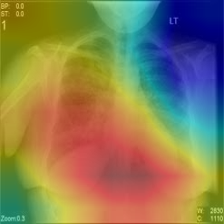
This research addresses the need for transparent diagnostics in pediatric pneumonia. It develops an interpretable deep learning model using ResNet-50 and BayesGrad-CAM to classify chest X-rays, providing visual explanations for model predictions to enhance clinical trust.

An open-source tool to help select explainable AI models and components based on specific transparency and interpretability needs. It addresses the challenge of choosing appropriate XAI techniques by comparing their salience and applicability for different use cases.

An open-source, energy-efficient training framework designed to reduce GPU power consumption during deep learning model training. It tackles the environmental cost of AI by implementing optimization techniques that maintain model performance while lowering energy usage.

An open-source reinforcement learning agent for UAV autonomous flight. This project explores simulation-to-real-world transfer, training agents in simulated environments to perform complex navigation tasks, with the goal of enabling efficient operation in dynamic real-world scenarios.

An open-source tool for label noise detection and dataset uncertainty analysis. It addresses data hygiene issues in machine learning pipelines by identifying mislabeled or ambiguous samples, helping to improve model reliability and training efficiency through cleaner input data.
Pneumonia remains one of the leading causes of death among children worldwide, underscoring a critical need for fast and accurate diagnostic tools. In this paper, we propose an interpretable deep learning model on Residual Networks (ResNets) for automatically diagnosing paediatric pneumonia on chest X-rays. We enhance interpretability through Bayesian Gradient-weighted Class Activation Mapping (BayesGrad-CAM), which quantifies uncertainty in visual explanations, and which offers spatial locations accountable for the decision-making process of the model. Our ResNet-50 model, trained on a large paediatric chest X-rays dataset, achieves high classification accuracy (95.94%), AUC-ROC (98.91%), and Cohen's Kappa (0.913), accompanied by clinically meaningful visual explanations. Our findings demonstrate that high performance and interpretability are not only achievable but critical for clinical AI deployment.
This work is intended for research purposes only and is not a diagnostic or clinical decision-making system. Clinical validation is required prior to deployment.

Presented research on interpretable deep learning approaches for pneumonia detection in pediatric chest X-ray images. The talk emphasized the role of explainability techniques in understanding model decision patterns and highlighted the importance of transparency and trust in medical AI systems. The presentation facilitated academic discussion around the use of explainable AI methods in healthcare diagnostics.

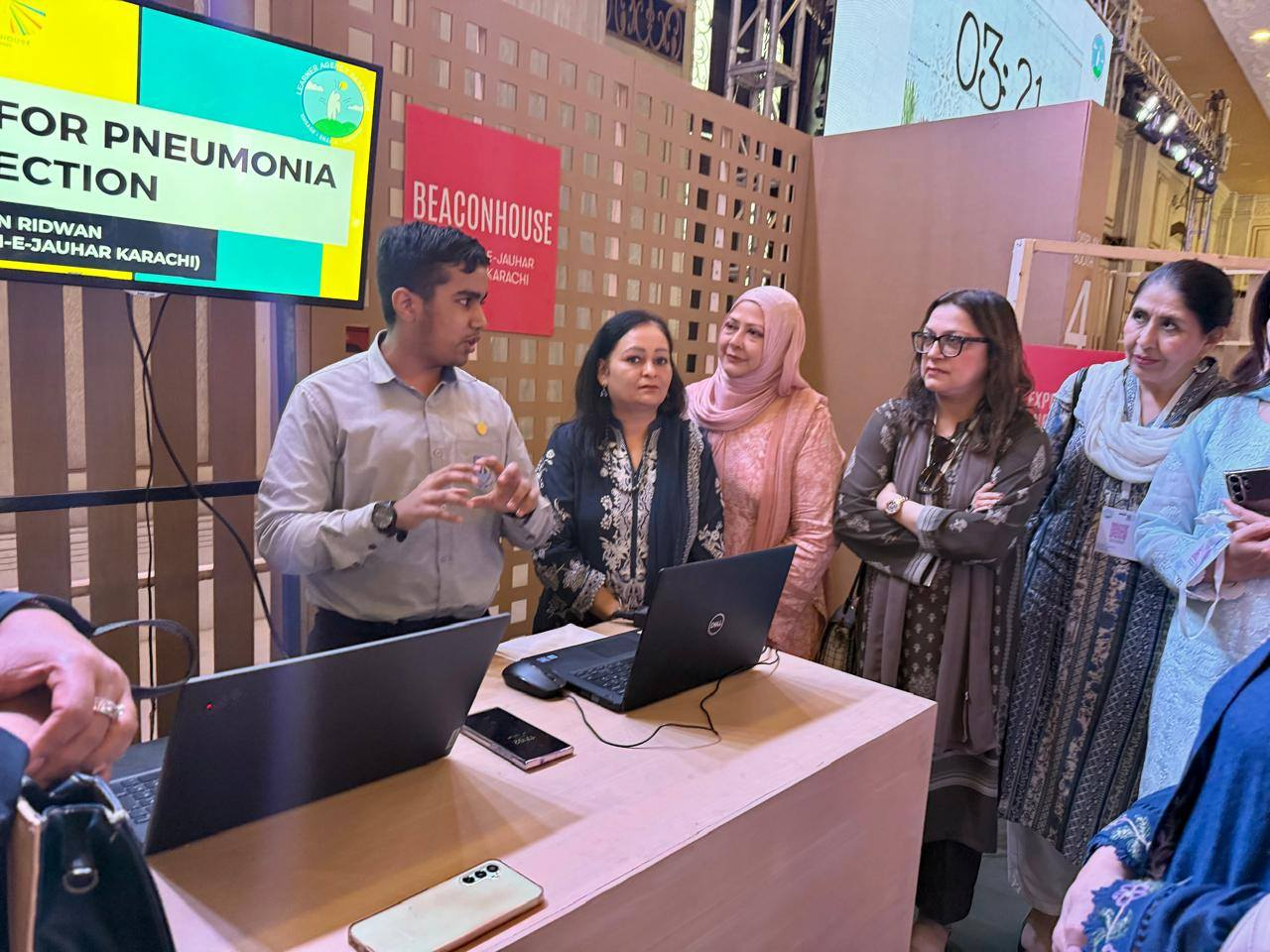
My research focuses on developing transparent, interpretable, and trustworthy AI systems. I am particularly interested in bridging the gap between high-performance deep learning models and human understanding, with applications in healthcare, autonomous systems, and sustainable computing.
AXON explores a cognitively grounded language model architecture inspired by Global Workspace Theory and principles of human information integration. The research investigates how specialized reasoning processes can be coordinated through a shared representational workspace, enabling selective attention, context-driven synthesis, and coherent decision-making. The overarching goal is to move beyond monolithic language models toward systems that exhibit structured reasoning, interpretability, and emergent general intelligence behaviors.